
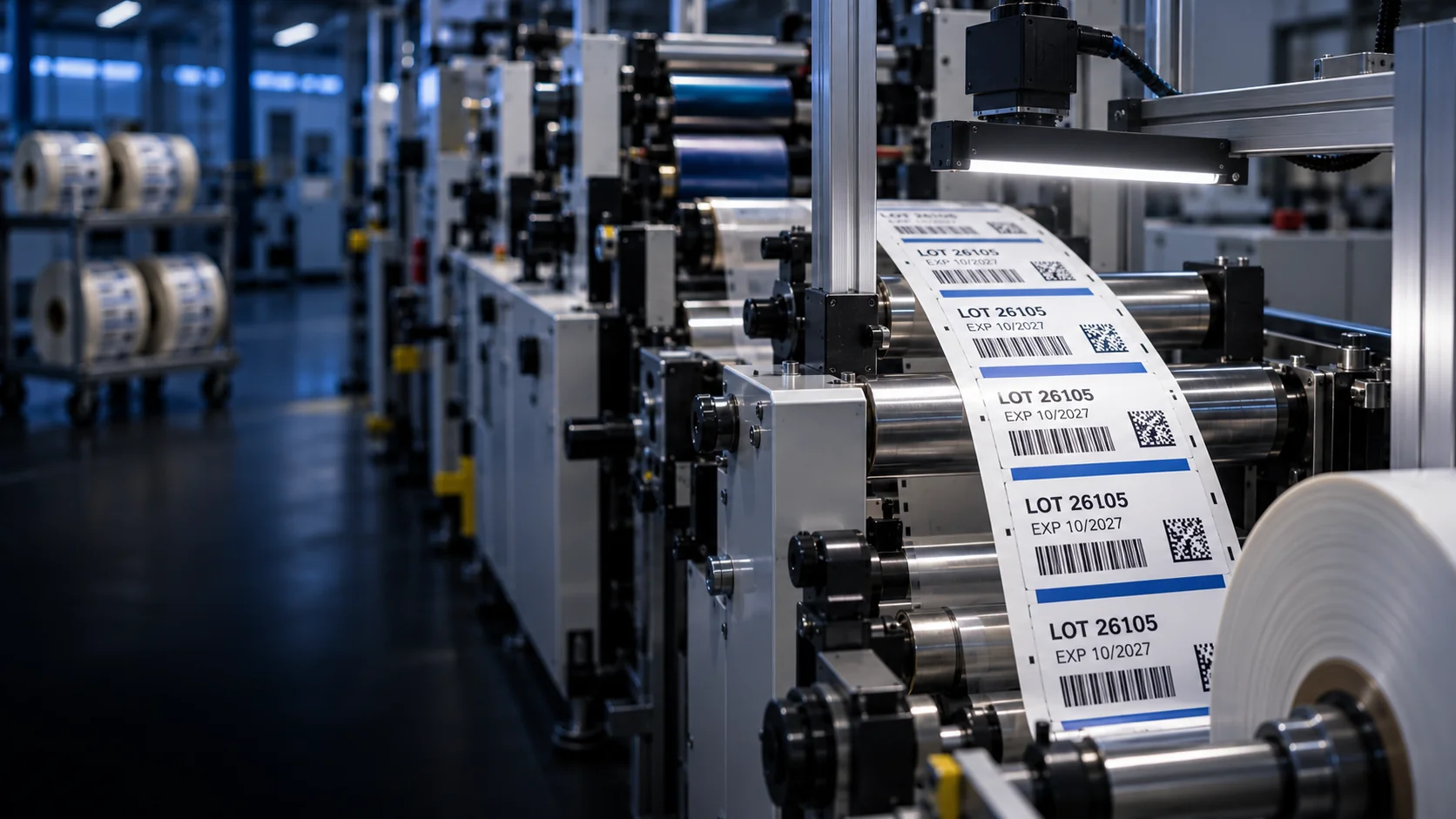
Print & labels
Graphics, colour, text and codes on labels, reels, cards and packs. From image acquisition to locating the anomaly.
Four questions about print
-
Is it there, and does it match the reference?
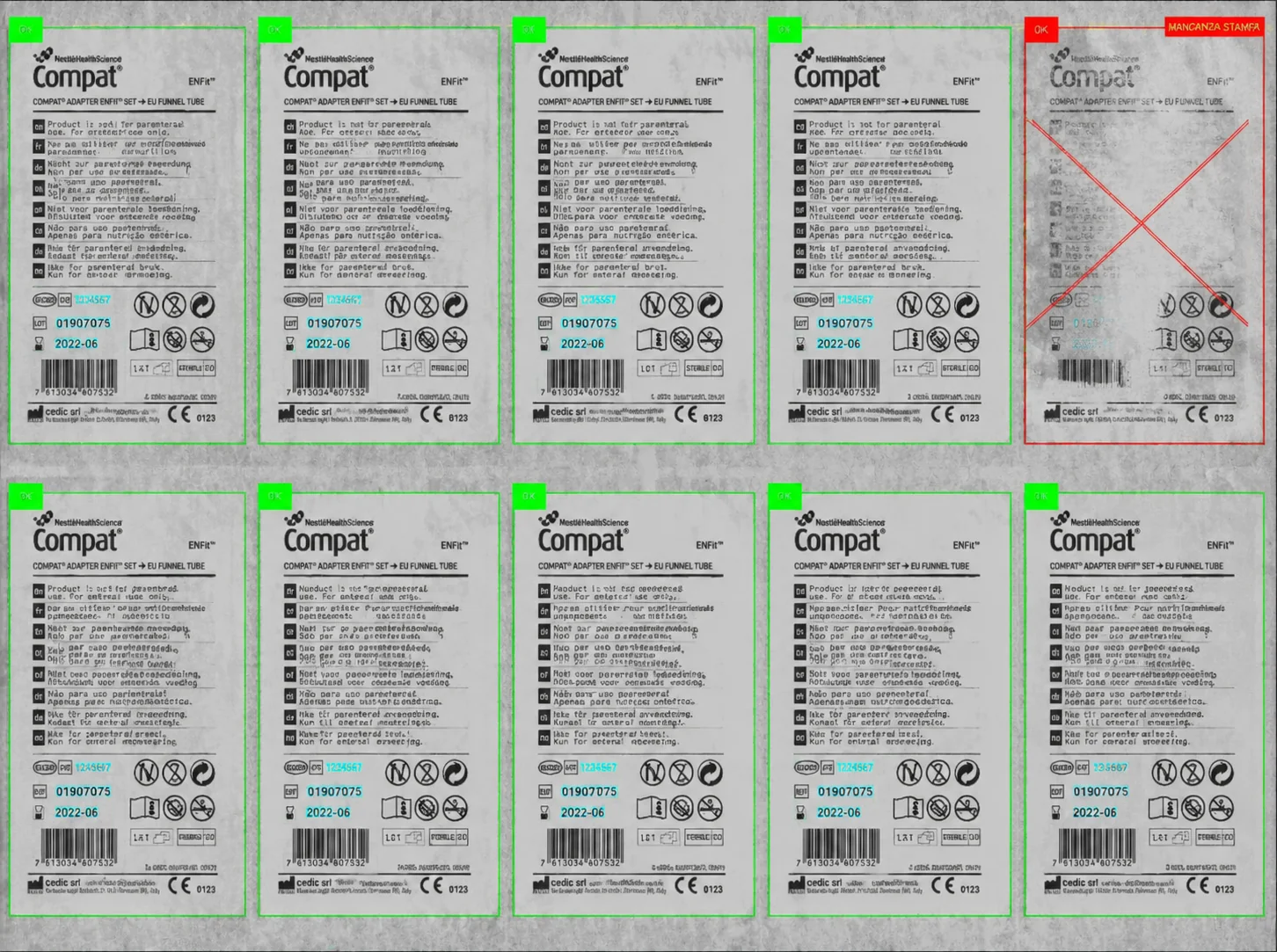
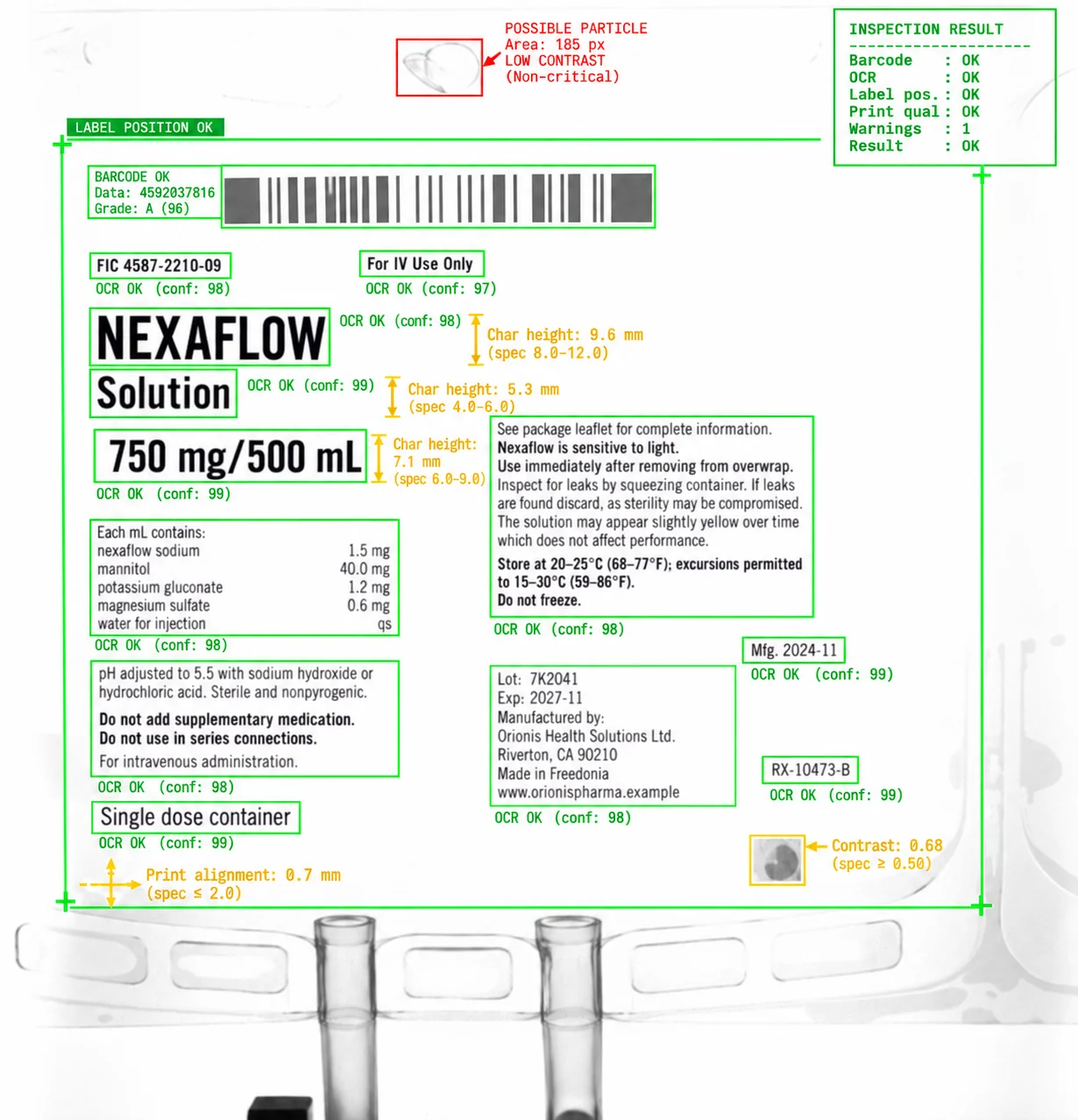
Presence, position and colour of printed elements, compared with the reference. A print that is present can still be degraded.
- Missing or degraded print
- Colour on defined areas
- Element position
-
Can it be read, and read well?
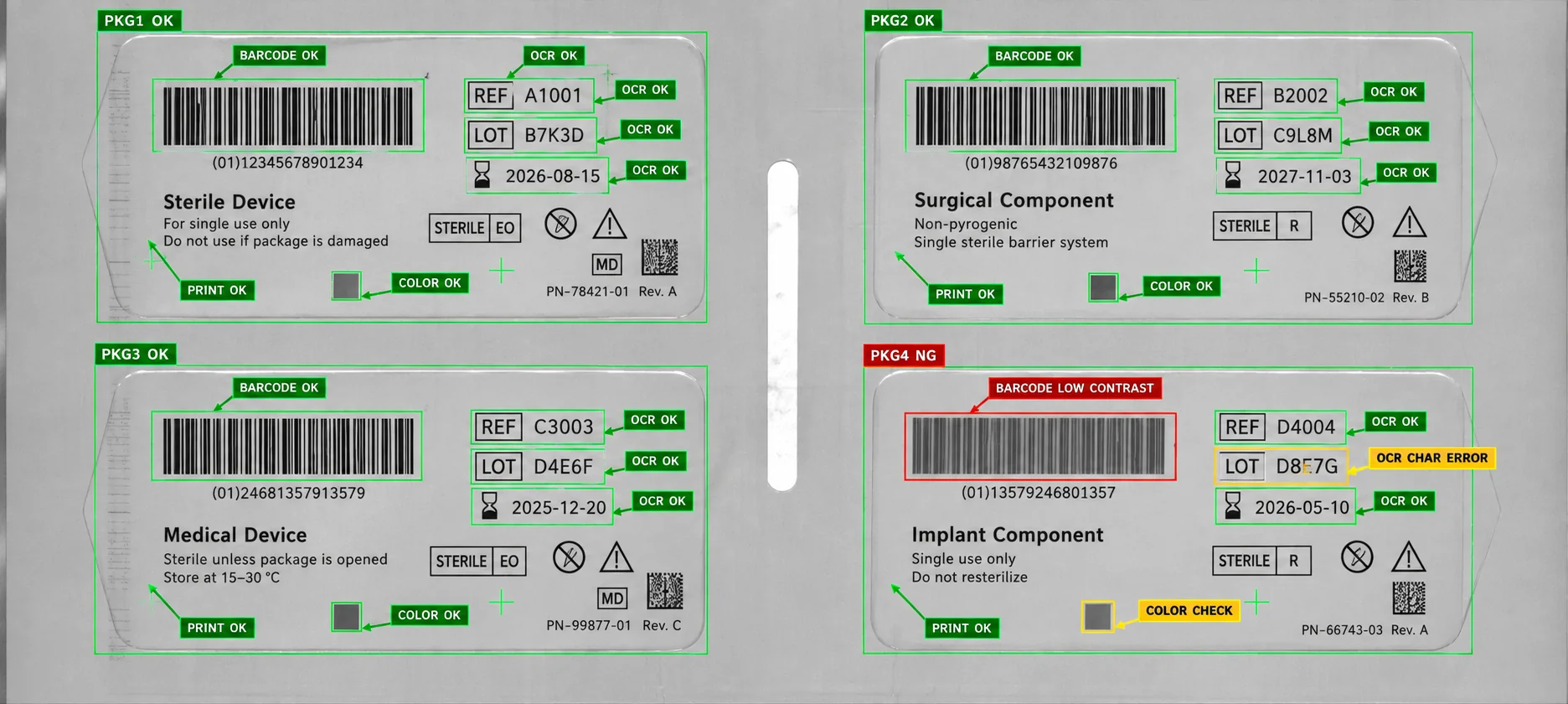
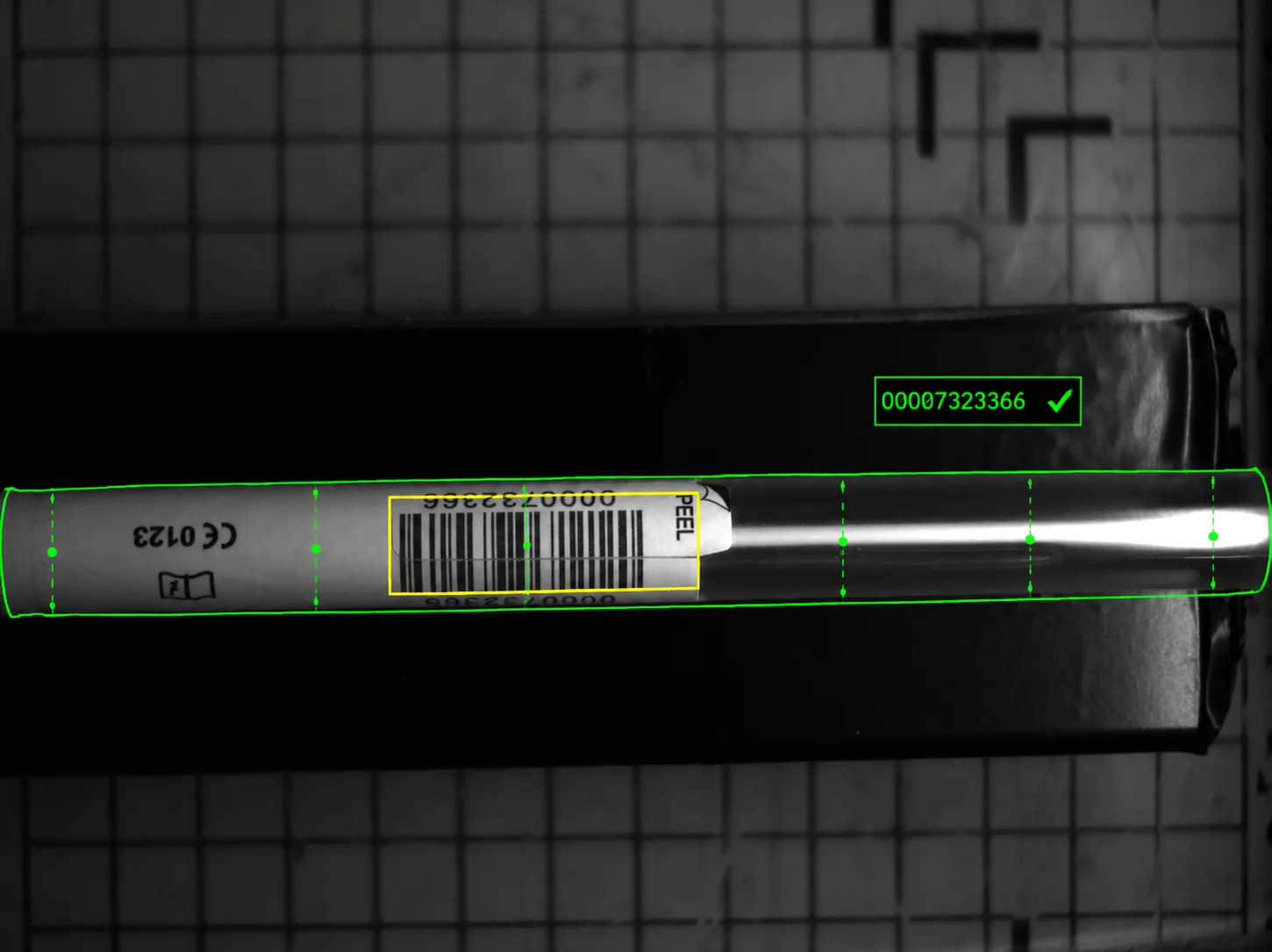
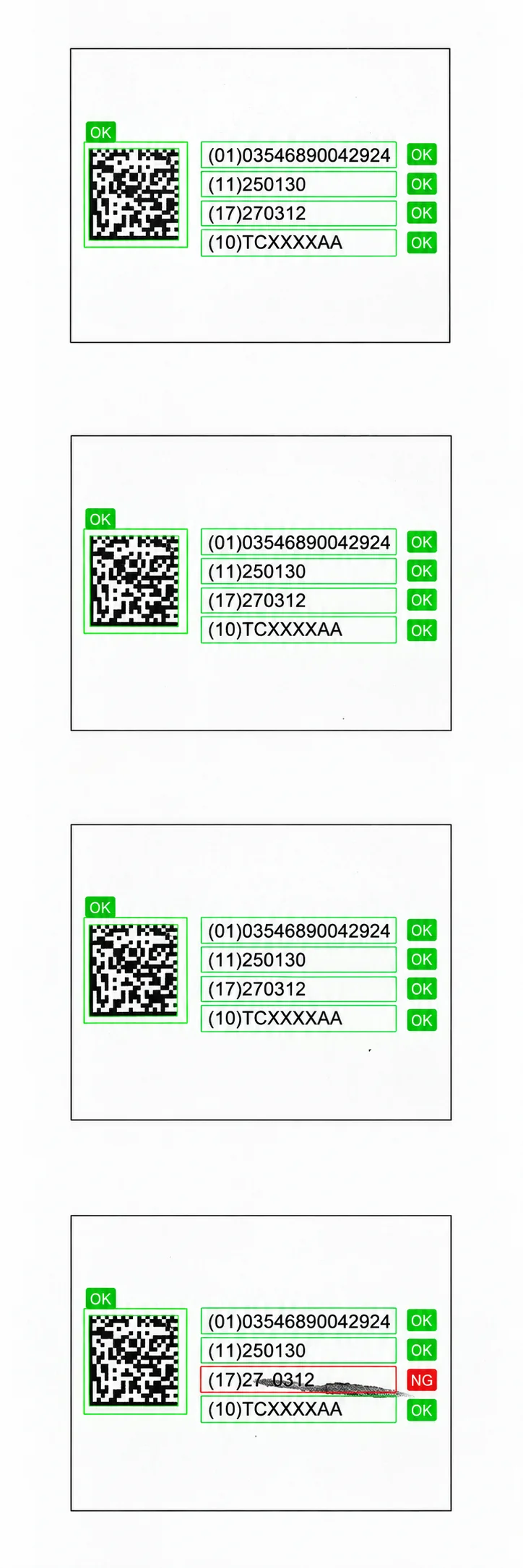
Reading a code and verifying its print are distinct checks. The reading region follows the actual position of the print, even when rotated or deformed.
- OCR and character verification
- Barcode quality
- DataMatrix and 2D codes
-
Are pitch and registration regular?
On a reel, the pitch between one print repeat and the next is checked together with print appearance. The result tells a print defect from a pitch deviation.
- Pitch and reference mark
- Registration and holes
- Defects and enlarged details
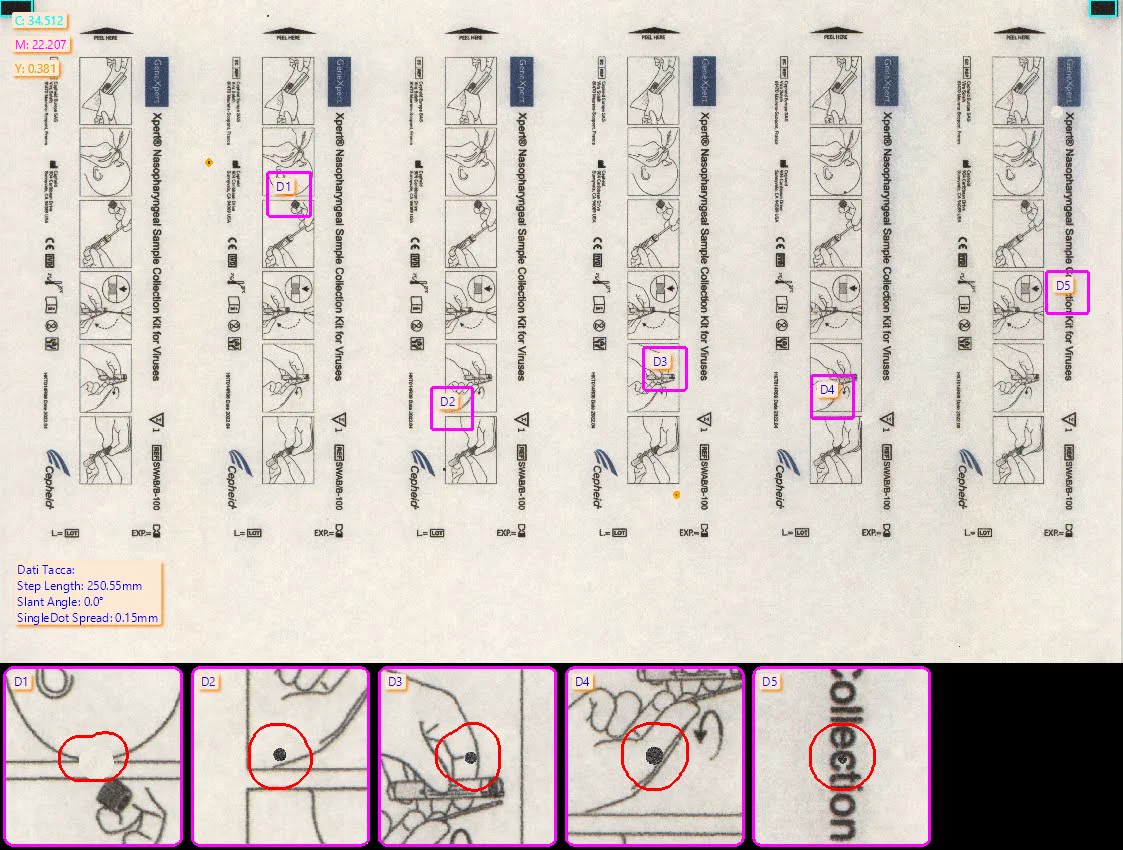
LynxLabel · annotated analysis with enlarged details; not a uniformly scaled view. -
Does inspection cover successive images?
With moving print, on the printer or on stepping lines, successive captures are stitched together. A defect crossing two images stays visible and has a position.
- Stitched captures
- Defects across two images
- Position on the material
Inspection in practice
All industry cases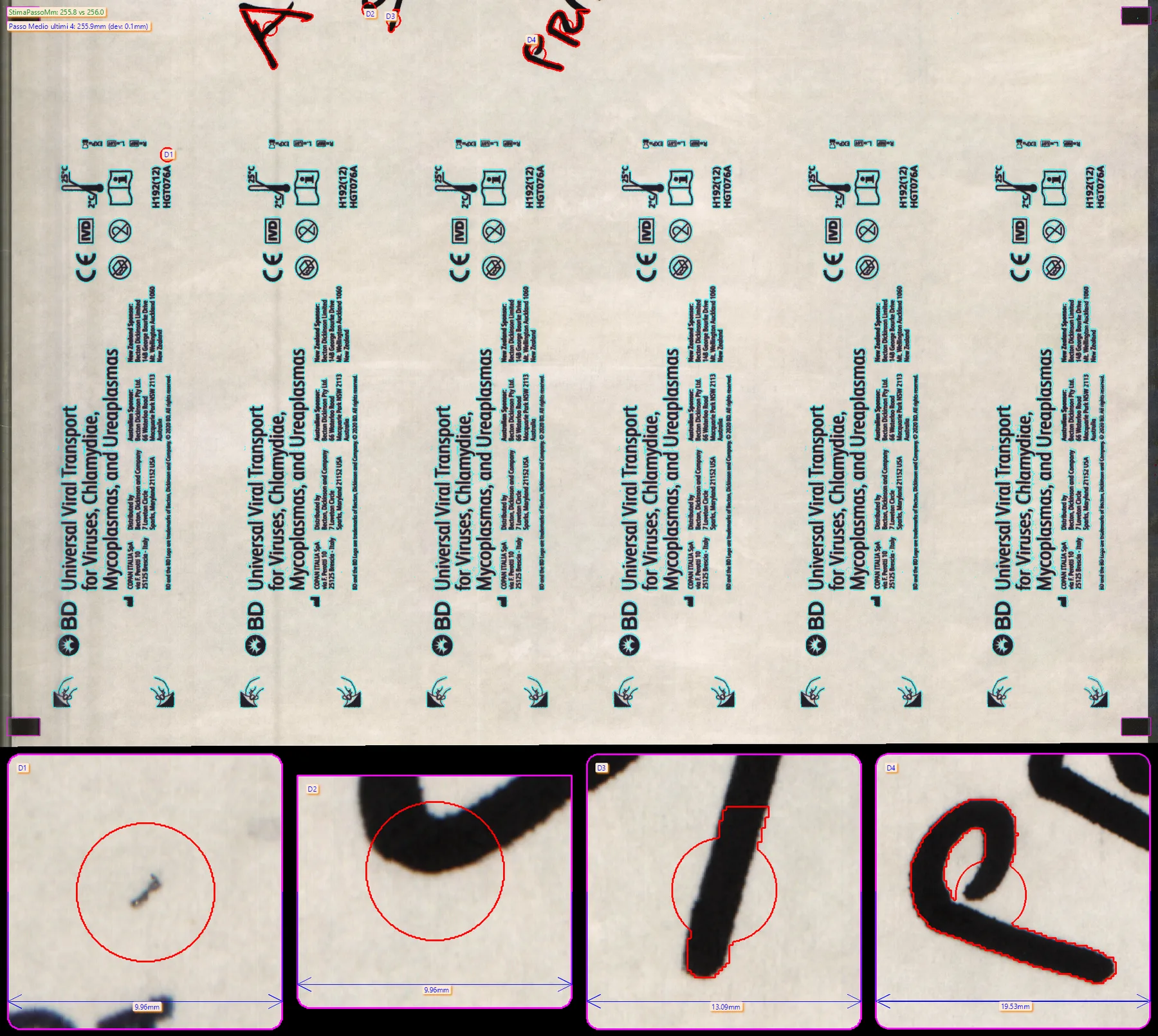 Read the case
Roll printing: defects and pitch consistency
Print defects and changes in the distance between repeats on roll material.
 Read the case
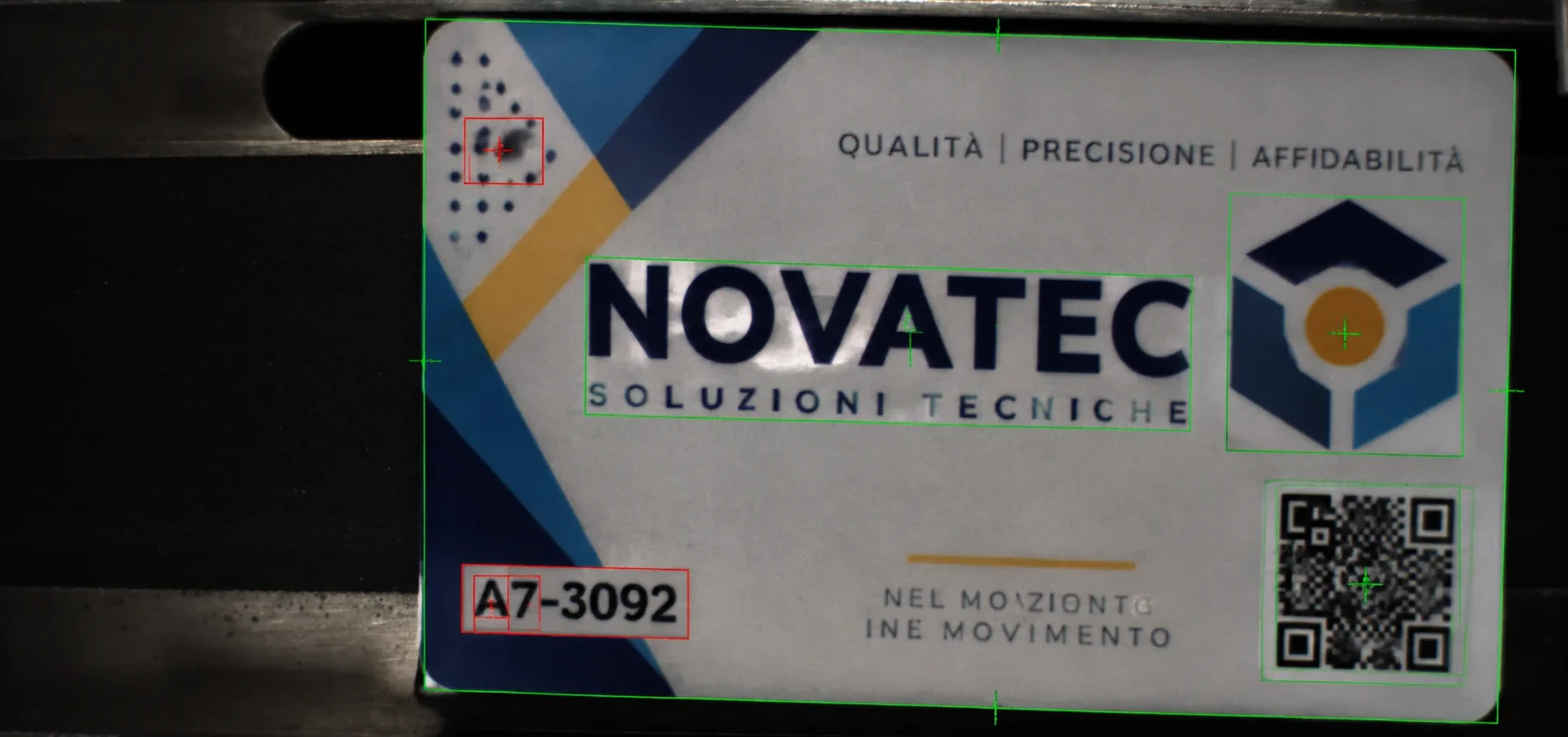
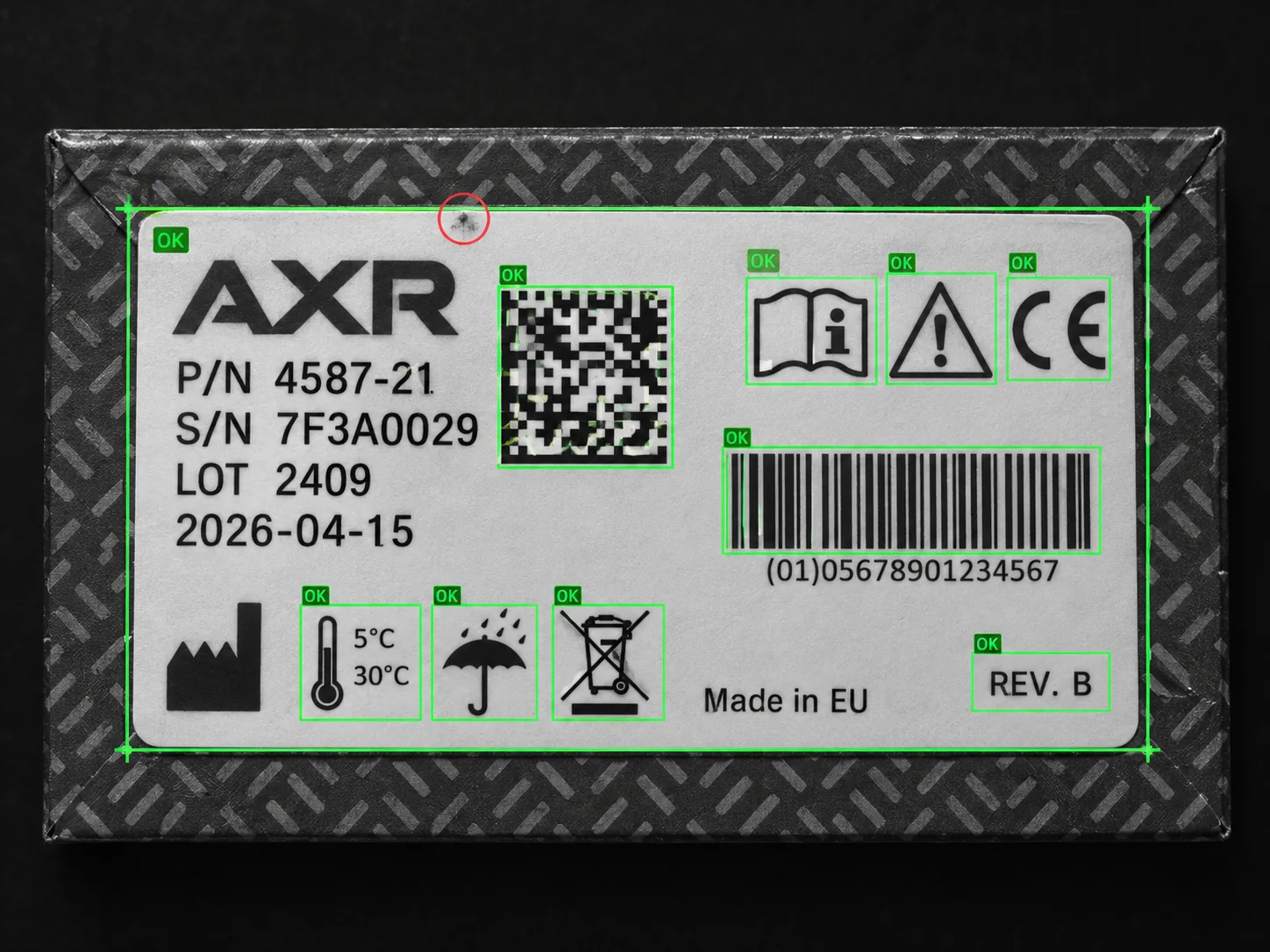
Printed cards: code reading, characters and colour
Inspection of barcodes, DataMatrix codes, characters and graphics on printed cards, including element position and colour.
 Read the case
Labels: print quality at the gluing station
Label print quality at the dedicated label gluing station.
Show us the print to inspect
Describe the substrate, the print to inspect and the line speed.
Describe your problem